 Pagal World
Ensuring peak performance and safety for unmanned aerial vehicles (UAVs) requires a rigorous pre-flight testing phase, particularly concerning UAV hovering stability. In complex industrial environments—such as power line inspections or wind turbine blade surveys—a drone’s ability to maintain a rock-solid position is not just a matter of efficiency, but of risk mitigation. A high-precision Benewake lidar sensor has become a critical component in this process, providing the real-time distance data necessary for flight controllers to execute minute, rapid adjustments.
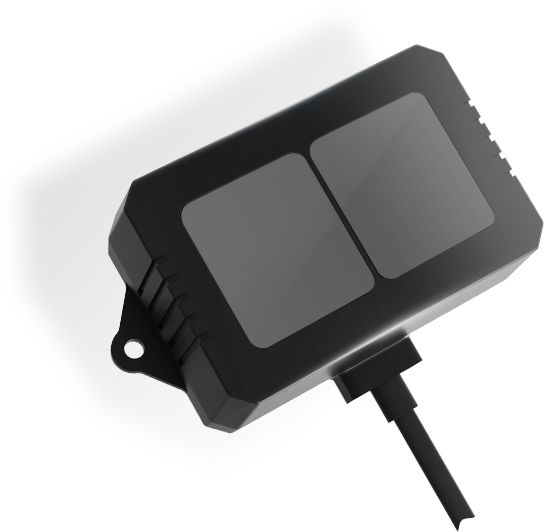
The Critical Role of Precision Ranging
Hovering stability is heavily dependent on the quality of the altitude-hold system. Traditional barometric or ultrasonic sensors often struggle in industrial settings due to air pressure fluctuations or acoustic interference. In contrast, LiDAR technology offers stable, centimeter-level accuracy that is unaffected by environmental noise. By integrating a Benewake lidar sensor, operators can ensure that the UAV accurately perceives its distance from the ground or vertical structures, even in the presence of sunlight levels up to 100Klux.
Pre-Deployment Stability Checklist
To ensure a UAV is ready for mission-critical deployment, the following testing steps are recommended:
Vibration and Jitter Assessment: The fuselage should be checked for any signs of jitter during a stationary hover. Systems utilizing advanced algorithms, such as specialized rain and fog filtering, help ensure the sensor data remains clean. This prevents unnecessary motor strain and reduces the risk of equipment damage caused by erratic flight controller responses to noisy data.
Weight and Balance Verification: Every gram matters for flight endurance and maneuverability. Ultra-lightweight LiDAR modules, such as those weighing approximately 1.35g, are utilized to maintain an optimal center of gravity. This allows for high-precision sensing without compromising the flight time or payload capacity of the aircraft.
Integration and Flight Controller Testing: Plug-and-play testing with mainstream flight controllers is performed to verify that the ranging data is being processed with minimal latency. This ensures the system is ready for immediate deployment with reduced setup time, which is vital for emergency inspections or rapid-response scenarios.
Sensor Configuration Check: Verification is required to ensure the LiDAR is configured correctly for the specific mission. This includes checking orientations, such as downward-facing for altitude holding or forward-facing for bi-directional obstacle avoidance, to ensure comprehensive coverage.
Featured Solution: The TFS20-L Mini-Module
The TFS20-L is a fully integrated single-channel dToF ranging mini-module specifically designed for high-performance needs in a compact form factor. It incorporates a highly sensitive infrared-enhanced SPAD sensor and utilizes a histogram statistical algorithm to achieve high-precision distance measurements. This makes it an ideal Benewake lidar sensor for modern UAV systems that require reliable data in a miniature package where space is at a premium.
With physical dimensions of only 21mm * 15mm * 7.87mm and a total weight of 1.35g, it is an excellent choice for miniature dToF applications. The module offers a maximum operating range of up to 20m, providing sufficient headroom for most industrial inspection heights, and maintains an accuracy of plus or minus 6cm. Furthermore, it features sunlight resistance of 15m even at 100Klux, ensuring UAV hovering performance remains consistent across various outdoor lighting conditions. Operating on a single 3.3V power supply with built-in temperature compensation, the TFS20-L supports both I2C and UART interfaces for seamless integration into a variety of flight control architectures.
Strategic Implementation and Environmental Resistance
One of the most significant advantages of utilizing dToF technology in pre-flight testing is its ability to perform in high-ambient-light environments. Industrial sites often have areas of intense lighting or reflective surfaces that can confuse lesser sensors. The 100Klux sunlight resistance of the TFS20-L ensures that the stability of the drone is not degraded as it moves between deep shadows and direct, harsh sunlight.
The histogram statistical algorithm integrated into the module helps filter out optical noise, which is common in dusty or misty industrial environments. This allows the drone to maintain a stable hover even if there is light atmospheric interference, a common occurrence in active construction, mining zones, or during bridge inspections. By providing a stable and accurate distance at all times, the flight controller can make micro-adjustments to the motor speeds, resulting in a smooth and safe flight profile that protects both the equipment and the surrounding infrastructure.
Technical Performance in Confined Spaces
When testing for deployment in tunnels or narrow passages, the TFS20-L demonstrates superior performance. Unlike ultrasonic sensors that can produce multipath errors due to echoes from walls, the infrared-enhanced SPAD sensor provides a direct line-of-sight measurement. This level of technical precision is required for maintaining a steady hover when a UAV is tasked with stationary imaging or structural analysis.
The built-in temperature compensation further ensures that ranging data does not drift as the sensor warms up during operation or as the ambient temperature changes. For professional operators, this reliability means that the UAV hovering stability observed during the pre-flight check will be maintained throughout the entire mission duration, regardless of thermal shifts in the environment.
About Benewake
Benewake (Beijing) Co., Ltd. is a global leader in the LiDAR industry, providing the “eyes” for a smarter, safer world through advanced Time-of-Flight (ToF) technology. By delivering high-precision sensors that excel in both compact consumer builds and rugged industrial applications, the company enables machines to perceive their surroundings with unprecedented clarity. From warehouse automation to large-scale industrial infrastructure, Benewake is committed to pushing the boundaries of what is possible in optical sensing.
Precision is the foundation of autonomy. Do not let environmental complexity limit your operational potential—equip your fleet with Benewake’s market-proven LiDAR technology today and redefine the standards of flight stability.
